


What are the key tools in your diplomatic toolbox?
I have come to believe that diplomacy begins long before you enter a negotiating room. The most important tool is trust. It takes years to build, but in a crisis, it can save you days or more importantly, lives.
My diplomatic toolbox therefore starts with relationships: the ability to pick up the phone, speak candidly, listen carefully, and understand not only what your counterpart is saying, but what is driving their position.
A second tool is relevance. Diplomacy today cannot operate only through traditional political channels. An ambassador must be equally comfortable discussing security with the Pentagon, trade with the private sector, technology with an entrepreneur, or regional affairs with Congress and think tanks. The strongest partnerships are those that develop multiple points of connection so that they are not dependent on a single issue, administration, or personality.
And finally, there is presence. Particularly during difficult periods, diplomacy cannot be conducted from a distance. You have to show up when circumstances are good, but especially when they are not.
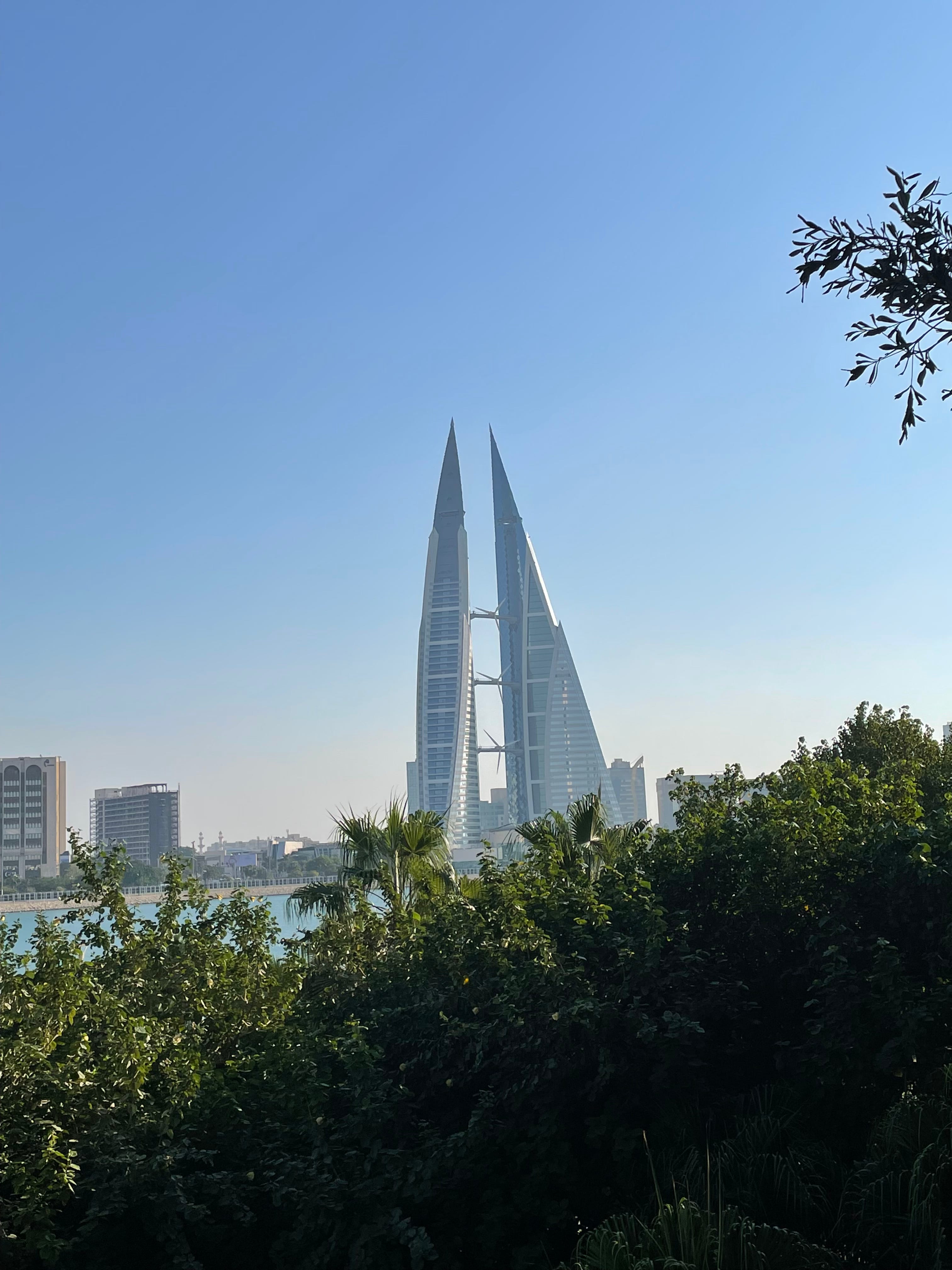
Bahrain has long understood the value of connection. At the crossroads of the Gulf, we have built our role around bringing people, markets, and ideas together, serving as a trusted partner, a convening space, and a bridge between regions and institutions. That same instinct shapes how I approach diplomacy.
For me, diplomacy is ultimately the art of making yourself useful to your country, to your partners, and, when possible, to the cause of peace.
Courtesy of the author
Can you share a few leadership lessons about navigating the pressures of the lingering war in the region and its impact on your country and its people?
The past months have reinforced several leadership lessons for me.
First: Calm is a strategic asset. Especially when missiles and drones are threatening your country, infrastructure is being damaged, families are concerned for their safety, and markets are reacting in real time. Leadership requires urgency without panic. People look to their institutions not simply for protection, but for confidence.
Second: Resilience is built before a crisis, not during it. Bahrain’s ability to navigate this period rests on investments and relationships developed over decades: capable national institutions, strong security partnerships, economic diversification, regional cooperation, and a society accustomed to engaging with the world.
Third: Never allow today’s crisis to consume tomorrow’s agenda. Even while responding to immediate security threats, Bahrain, under the wise leadership of His Majesty the King, continues building its economy, educating its young people, attracting investment, and preparing for the technologies and industries that will define the next generation. If conflict forces a country to stop thinking about its future, the conflict has already extracted too high a price.
There is also a deeply human dimension. Behind every geopolitical headline are parents taking their children to school, entrepreneurs evaluating key operational decisions, and young people wondering what their future will look like. Proper leadership will always remember them.
For Bahrain, our objective is not simply to endure this period. It is to emerge more resilient, more connected to our partners, and even more determined that the region’s future be defined by opportunity rather than conflict.
What features of your country’s relationship with the United States hold the bilateral relationship strong? Can you give us an example of recent developments that embody this relationship?
What makes the Bahrain–United States relationship durable is that it is deeply institutional and multi-dimensional.
It is a security relationship, certainly. Bahrain is a Major Non-NATO Ally and has hosted the headquarters of the U.S. Navy’s Fifth Fleet for decades. Our forces fight together, operate together, train together and work together to protect maritime routes that are essential not only to the Gulf, but to the global economy.
But it is also an economic relationship. The U.S.–Bahrain Free Trade Agreement has been in force for twenty years, American companies have the option of operating within a dedicated U.S. trade zone, while enjoying preferential treatment and prioritization in multiple areas.
Increasingly, it is also a relationship about the future: technology, investment, energy, innovation and economic resilience.
Perhaps the clearest recent example is the Comprehensive Security Integration and Prosperity Agreement, or C-SIPA. What I find important about C-SIPA is that it is not just simply another agreement between governments. It recognizes something fundamental about modern partnerships: security and prosperity can no longer be separated. Defense, economic cooperation, technology and network security increasingly reinforce one another.
And this framework has been tested in real circumstances. In March, Bahrain, the United States and the United Kingdom convened extraordinary consultations under C-SIPA amid the regional conflict, demonstrating that the architecture we had built in more stable times could be activated when it was actually needed.
That is what distinguishes enduring partnerships from transactional ones.
Our relationship with the United States has persisted through wars, economic cycles, changes of government and enormous transformations in the Middle East because its foundation is deeper than any single moment.
Bahrain has been a home for America’s presence in the Gulf for generations. America, in turn, has been a partner in Bahrain’s security and development. The challenge before us now is to ensure that the next chapter is not simply about protecting what we have built together, but imagining what we can build next.